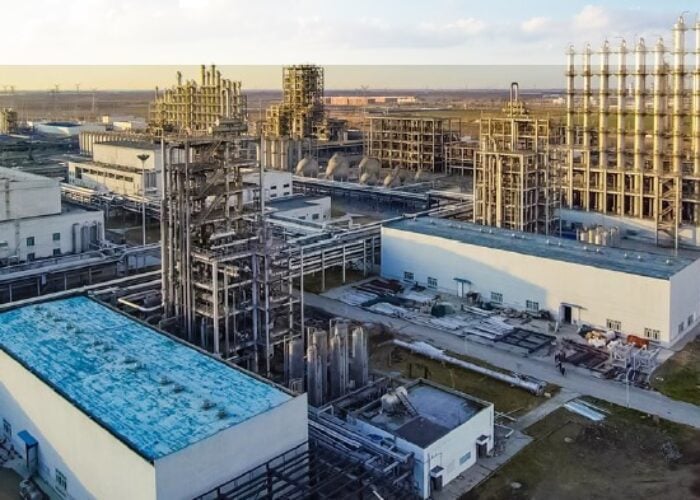
The CISARIS oven from Singulus Technologies is an in-line rapid thermal processing equipment, designed for the CIGSSe absorber formation on large area glass substrates. The main features of the CISARIS include a high uptime and mechanical yield, as well as a fast cycle time, which, in combination with the robust selenisation process, lead to a production capacity of over 25 MWp per year.
Problem
Correct CIGS absorber formation is dependent on the control the composition of the deposited films in a reliable and repeatable manner for high-volume production applications.
Try Premium for just $1
- Full premium access for the first month at only $1
- Converts to an annual rate after 30 days unless cancelled
- Cancel anytime during the trial period
Premium Benefits
- Expert industry analysis and interviews
- Digital access to PV Tech Power journal
- Exclusive event discounts
Or get the full Premium subscription right away
Or continue reading this article for free
Solution
CISARIS is based on a previous generation of proven selenisation ovens. CISARIS can safely handle the thermal processing of large glass substrates of over one square metre at temperatures up to 600 degrees Celsius under a toxic and corrosive gas atmosphere. High heating and cooling rates, combined with improved temperature homogeneity during all process stages are the key factors which allow the formation of an optimal CIGSSe absorber, required for the production of high efficiency solar modules.
Applications
Inline rapid thermal processing equipment, designed for the CIGSSe absorber formation.
Platform
CISARIS is a second generation inline selenisation furnace with optimised cycle time. Provides rapid heating (up to ∼ 4 degrees Celsius/second) of large substrates with metal precursor coating (CIG) with uniform heating up to 550 °C by using optimized IR radiators for achieving the required crystal quality. Uniform cooling of the substrate to avoid glass warpage is enabled by improved temperature control (mean variation < 5 degrees Celsius) at all process stages.
Availability
Currently available.