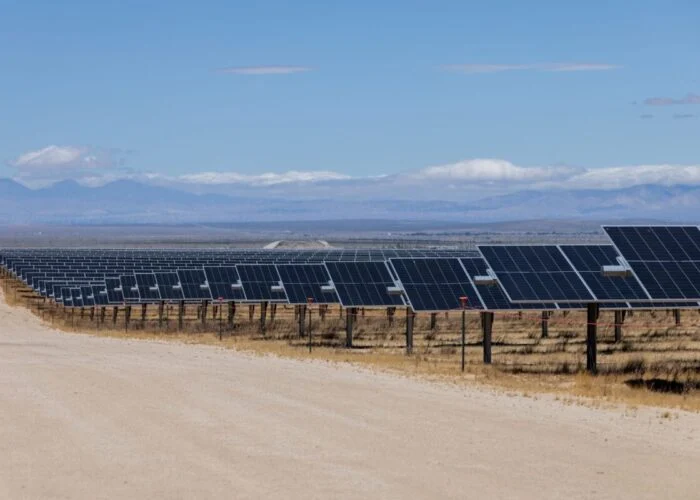
Renewable energy accounted for 31.7% of global electricity generation in 2024, with solar power in particular contributing 2,105.8TWh, up from 1,624TWh the previous year.
These are some of the headline figures from the latest report from the International Renewable Energy Agency (IRENA), which published its ‘Renewable energy statistics 2026’ report today. It covers generation figures from 2024, and capacity figures from 2025.
Try Premium for just $1
- Full premium access for the first month at only $1
- Converts to an annual rate after 30 days unless cancelled
- Cancel anytime during the trial period
Premium Benefits
- Expert industry analysis and interviews
- Digital access to PV Tech Power journal
- Exclusive event discounts
Or get the full Premium subscription right away
Or continue reading this article for free
Renewables accounted for 49.5% of all electricity generation capacity in 2025, up from 46.2% in the previous year, marking a 15.5% year-on-year growth.
Solar generated the third-most electricity in 2024, behind hydropower (4,472.4TWh) and wind (2,499.3TWh), but solar boasted the highest rate of year-on-year growth across these technologies; between 2023 and 2024, solar generation increased 29.7%, while hydropower generation increased by 4.7% and wind generation increased by 8.5%.
Solar now leads all renewable energy technologies in terms of cumulative capacity deployments, with 2,396.7GW in operation in 2025, ahead of 1,295.8GW of hydropower in operation and 1,291GW of wind in operation. Some of the leading countries for deployment also broke significant milestones in 2025, with the US surpassing 200GW of cumulative installations and India and Germany exceeding 100GW, as shown in the graph below.
This graph does not include China, which has had the most cumulative capacity in the world by quite some margin throughout the period covered by the IRENA figures; in 2025, China reached a cumulative total of 1,202.2GW, close to six times the deployment in the US, which has the second-largest operational fleet.
These growth figures in China and the US, in particular, have helped drive local energy mixes that are increasingly reliant on solar PV. Between 2023 and 2024, the contribution of solar to North American energy generation increased from 17% to 20%, while in Asia the contribution of solar increased from 22% to 26%.
In both regions, the contribution of hydropower to electricity generation fell year-on-year, while the contribution of fossil fuels remained constant, and Simon Stiell, executive secretary of the United Nations Framework Convention on Climate Change, drew a comparison between renewable energy and fossil fuels in the wake of the publication of the IRENA figures.
“With renewable power generation clocking its fastest growth ever, the shift to clean energy is charging ahead, because it’s now cheaper, safer and faster-to-market, in stark contrast to this year’s ongoing fossil fuel cost chaos—driving inflation painfully higher for every economy, millions of businesses and billions of households,” said Stiell.
World invests US$7.5 billion of public money in solar in 2024
An uptick in public financing for new solar projects has helped contribute to this growth over the last few years. IRENA figures show that, in 2024, over US$7.5 billion in public finance was committed to new solar projects, and while this is down on the US$11 billion invested in 2023, much of the last half-decade has seen sustained increases in public finance for new solar projects, as shown in the graph below.
The strong financial fundamentals of solar PV are likely a factor behind this trend, with figures from IRENA, published earlier this month, showing that the technology retains one of the lowest levelised costs of electricity (LCOE) among energy generation technologies.
However, the rate of new renewable energy additions is insufficient to meet the target of 11.17TW of cumulative renewable energy capacity in operation by 2030, set at the COP28 summit in 2023. Last year, IRENA estimated that the world would fall short of this goal by 0.9TW, and while it did not provide a similarly detailed forecast in this year’s report, it noted that “significant acceleration will be required” to meet the 2030 deployment goal.
“This will require renewable electricity generation to expand at an unprecedented pace over the next decade—around 2.5 times today’s level,” said IRENA director-general Francesco La Camera. “Technologies are available, the economics are compelling. Now we must swiftly shift from fossil fuels to clean electricity across buildings, transport and industry.”