Social media and tech giant Meta has signed an agreement to procure power from space-based solar power startup Overview Energy.
Overview Energy proposes to launch satellites to generate solar power in space and beam it back to solar PV projects on Earth, theoretically allowing for 24/7 solar generation. The agreement with Meta would grant the Silicon Valley giant “early access” to up to 1GW of solar power from Overview’s space-based system to power its data centres and infrastructure for AI development across the US.
Try Premium for just $1
- Full premium access for the first month at only $1
- Converts to an annual rate after 30 days unless cancelled
- Cancel anytime during the trial period
Premium Benefits
- Expert industry analysis and interviews
- Digital access to PV Tech Power journal
- Exclusive event discounts
Or get the full Premium subscription right away
Or continue reading this article for free
Overview said it planned to launch an initial satellite demonstration in 2028, with commercial power production expected in 2030.
“Space solar technology represents a transformative step forward by leveraging existing terrestrial infrastructure to deliver new, uninterrupted energy from orbit,” said Nat Sahlstrom, vice president of energy and sustainability at Meta.
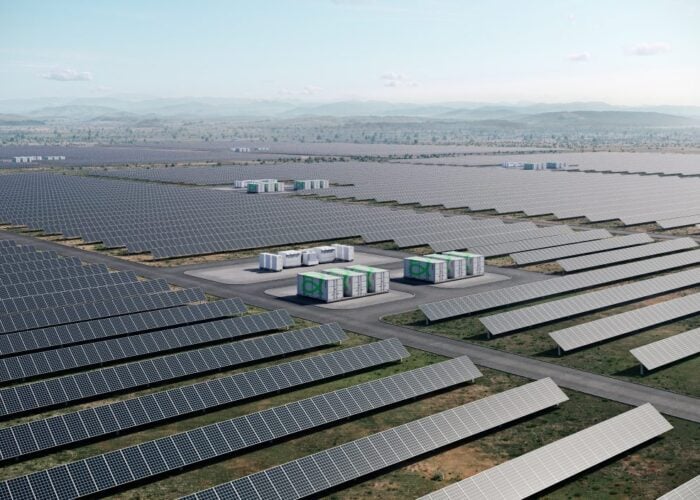
Explaining its proposed technology, Overview said it wants to launch satellites into geosynchronous orbit—which matches the speed of the rotating planet—to harvest solar energy and beam it to terrestrial solar PV plants as “low intensity, near-infrared light” to be converted into electricity.
The company claimed: “By extending the hours that solar installations can generate power, the system is designed to significantly increase their output without requiring new land, fuel, or lengthy grid interconnection processes. Overview’s beam is invisible, less intense than sunlight and passively safe for humans, animals, and aircraft.”
The technology could mark a development in the relationship between renewable energy and AI development, if it were adopted at scale. Overview’s claims that its technology could enable solar plants to “produce power around-the-clock” would overcome the fundamental limitation of intermittent, weather-dependent renewables like solar and wind and improve the proposition for data centre companies, which require almost constant “uptime” for their operations.
But the technology is yet to be deployed, and the intermittency of solar energy is currently largely solved by battery energy storage systems (BESS), which have fallen massively in price over recent years and do not require any satellites to operate.
Overview Energy said its technology uses “proven, commercially available components” and has designed its satellites for “mass manufacturing”. Its board includes Jim Bridenstine, former NASA administrator and congressman; Mike Griffin, another former NASA administrator; and Joseph Kelliher, former Federal Energy Regulatory Commission (FERC) chairman and EVP of regulatory at NextEra.
The growth of AI and data centre infrastructure in the US is much discussed, and major US tech firms like Meta, Amazon and Google have bought more US renewable energy (and primarily solar energy) than any other organisations in recent years.
This year, Big Tech companies—known in data centre parlance as “hyperscalers”—have moved from exclusively purchasing power to renewables asset ownership; Amazon bought a 1.2GW PV plant from bankrupt developer Pine Gate Renewables, and in March Google finalised its acquisition of Intersect Power.
“Space is becoming part of America’s energy infrastructure,” said Marc Berte, CEO of Overview Energy. “Our approach to space solar energy enables hyperscalers and technology providers to secure clean power with reliable siting, and speed to power. Together with Meta, we’re looking beyond traditional constraints on where and when power can be delivered to meet the growing demand for electricity.”
Beyond the potential usage for solar energy production, the proliferation of satellites in Earth’s orbit has reportedly caused problems for Astronomers. The satellites, often privately run by for-profit companies, like Elon Musk’s StarLink satellites, can obscure or affect images of the cosmos from space telescopes like Hubble. A study published in Nature led by NASA scientists found that in the next decade, the proliferation of satellites could impact 96% of the images taken at major space observation centres.